People facing extreme malnutrition in Sudan’s protracted crisis
For months MSF teams in Tawila have been treating malnutrition among patients who fled El Fasher,
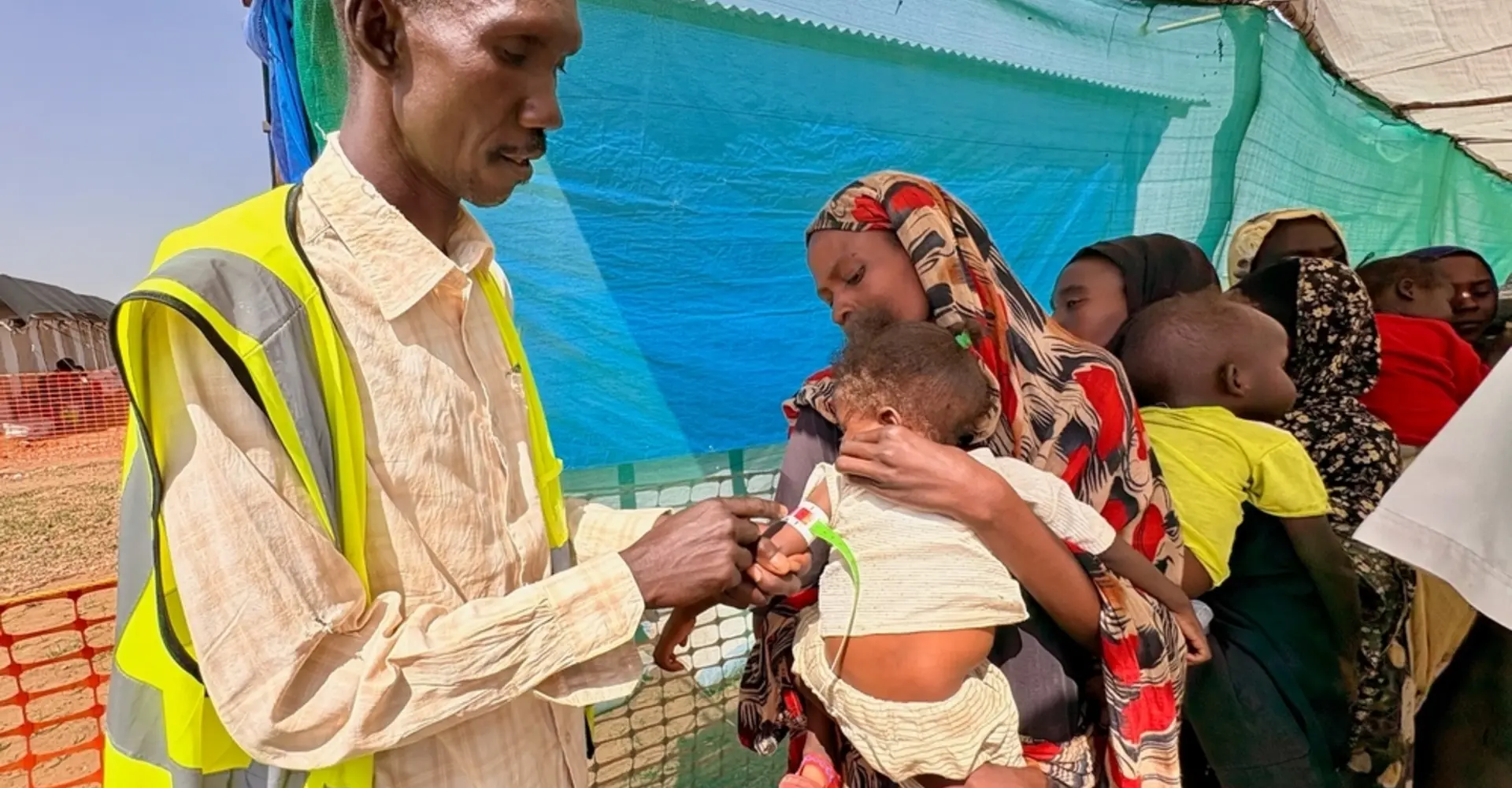
but malnutrition rates are now staggering. Among children under the age of five who reached Tawila
between 27 October, when RSF seized control of El Fasher, and 3 November, over 70% were acutely
malnourished, with 35 percent suffering from severe acute malnutrition. At the same time, 60% of the
1,130 adults MSF screened were acutely malnourished, 37% of whom were severely acutely malnourished.
Malnutrition rates are even higher among pregnant and breastfeeding women. MSF’s findings corroborate fears that famine devastated people in El Fasher, which was besieged for more than 500 days. They also correspond with the recently released IPC report that found famine in El Fasher and in Kadugli.
Survivors arriving in Tawila have described to MSF teams how life had become unbearable in El Fasher.
People report having had no access to food, as community kitchens shut down, humanitarian aid was
blocked, and markets were shelled and depleted. In September, 7 kg of millet cost SDG 500,000 (USD
208) and 1 kg of sugar SDG 130,000 (USD 54).
In desperation, people were left with no choice but to turn animal feed into human food. “We were
so hungry we began eating ambaz (animal feed). At first it was free, then we had to buy it for SDG
20,000 per 1.5 kg (USD 8), rising to SDG 50,000 (USD 20) in June,” a displaced woman told MSF in
North Darfur.
Those trying to bring food into El Fasher were shot by the RSF. Dozens of those who survived managed
to make it to Tawila, where they were treated by MSF.
“My cousin disappeared in June while trying for the first time to bring food, and since then we have
had no news. At the exit of El Fasher, they faced RSF fighters on motorcycles who shot at them,” says
a woman who fled the city in October.
MSF fears many people in and around El Fasher remain stranded, held for ransom, and unable to escape. The RSF and its allies must halt mass atrocities and provide safe passage for the survivors to flee.
People’s struggles are far from over once they reach Tawila. Since the start of the year, half of the
6,500 pregnant women MSF has seen for prenatal care were acutely malnourished, 15% with severe
malnutrition and 35% with moderate malnutrition. This puts their children at serious risk of being born
underweight or malnourished.
Beyond El Fasher, MSF teams across Sudan have seen a widespread deterioration in children’s
nutritional status in recent months. The crisis is being fuelled by overlapping factors, including
inadequate food, disease, insecurity, lack of livelihoods and unsafe living conditions.
"Right across Sudan there is more that can be done to reduce the suffering caused by malnutrition.
We call on all warring parties to allow humanitarian organisations safe and unimpeded access to
increase services and help reduce this crisis” says Myriam Laaroussi, MSF emergency coordinator.
Displacement, either for people moving within Sudan or from other countries, also plays a significant
role in driving malnutrition. In Blue Nile State, eastern Sudan, the arrival of Sudanese returnees from
South Sudan since June has pushed fragile resources to their limits. Thousands of families live in
makeshift camps with little access to clean water, food or hygiene services, leading to an ongoing
outbreak of cholera and a surge of preventable deaths among children. Between July and September,
MSF treated 1,950 severely malnourished children at the Damazin teaching hospital; 100 children
died, many from combined cholera and acute malnutrition.
Even when people can return home after being displaced, they often face significant challenges in
finding or affording food or accessing services such as medical care. In Khartoum State, malnutrition
has worsened since June, as more than 700,000 returnees have moved back into war-torn
neighbourhoods with limited access to water and healthcare. Al Buluk hospital in Omdurman in
Khartoum state admitted 351 malnourished patients in September, while Al Banjadeed hospital in
Khartoum city found 46% of children screened during consultations to be malnourished. The
humanitarian response in Khartoum is still far below needs, with few organisations present and major
gaps in both emergency aid and longer-term recovery efforts.
What’s more, the true scale of the crisis is likely far worse than reported. Without warring parties
granting safe and unimpeded access to people at risk, combined with increased funding and
humanitarian support from international organisations, more children will be vulnerable to Sudan’s
protracted malnutrition crisis.