Work with us
We rely on a strong network of professionals to deliver lifesaving medical aid.



The landlocked country, sat between Poland and the Russian Federation, has a population of 9.5 million.
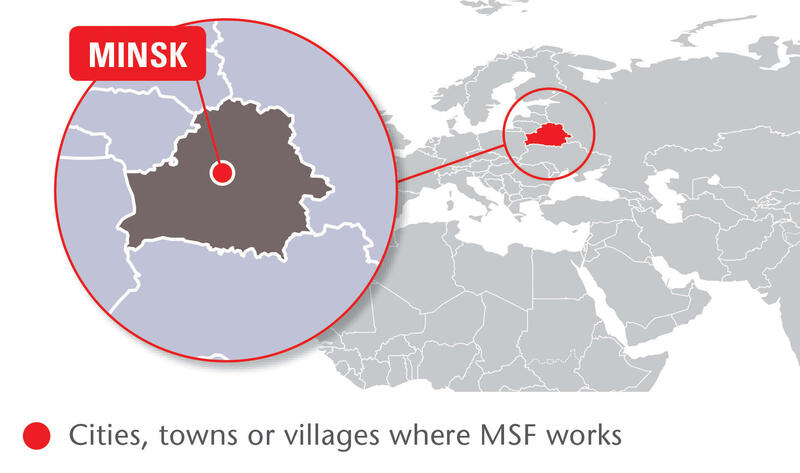
Its capital, Minsk, is known for its monumental Stalinist architecture.
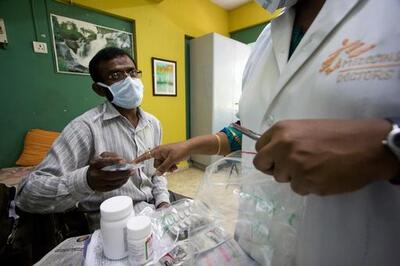
Oleg, 26, a bricklayer from Minsk, was diagnosed with TB and put on treatment in 2012, but he didn’t get better. In August 2015, he was admitted to the MSF programme and started on a new treatment regimen which includes a new and promising TB drug, bedaquiline. [[Article-CTA]]
Oleg tolerates the treatment well and reports that his appetite has improved, and he’s feeling much better now. He appreciates the support Igor, an MSF counsellor, is providing to the patients: “I can share my problems and concerns with him. It helps to go through this long treatment course.”
Oleg misses his wife and two-year-old daughter and wants to return home cured. He has advice for other TB patients: “You should by all means take the treatment. There’s nothing worse than the disease.”
In 2015, MSF opened its first project in Belarus, where the incidence of drug-resistant tuberculosis (DR-TB) is extremely high. Over half of the Belorussian TB patients are considered to have multidrug-resistant TB.
MSF is supporting the Ministry of Health in three TB dispensaries in the capital Minsk, and is working in a nearby hospitalisation centre in Volkovichi, with the main aim of improving outpatient DR-TB treatment. MSF also provides counselling and socio-economic support for patients, and is using new drugs to treat people with extensively drug-resistant TB.
More than 100 TB patients received pre-treatment diagnosis, treatment with regular follow up counselling sessions and social support (food) in order to improve their adherence. MSF also provided treatment using new drugs (bedaquiline and delamanid) for 12 patients with extremely drug-resistant TB.
Find out more in our 2015 International Activity Report