Myths and truths about Ebola disease (Bundibugyo virus)
Current Ebola disease outbreak in DRC
During an Ebola outbreak, what people believe about treatment centres, isolation and testing shapes whether they seek care in time. A conversation with Dr Tathy Modjake Nzoke, MSF Medical Activity Manager in North Kivu, on eight of the most common misconceptions, and what is actually true.
Ebola disease is rare, but it moves quickly, and so do rumours. In the communities where MSF teams are responding to the current outbreak in the Democratic Republic of Congo, caused by the Bundibugyo virus, some of the most damaging obstacles to care are not medical at all. They are fears about what happens inside a treatment centre, suspicions about why health teams disinfect homes, and worries that a word written on a medical form carries blame.
Those fears have consequences. A person who waits at home because the symptoms seem mild, or who avoids a treatment centre because there is no specific cure, arrives later and sicker, and may pass the virus to the people closest to them in the meantime. Dr Tathy Modjake Nzoke, MSF Medical Activity Manager in North Kivu, sets out the misconceptions teams hear most often, alongside what medical staff actually do and why.
Eight myths, and the truth behind them
What people say, and what medical teams responding to the outbreak want them to know.
✕ Myth
There is no point going to a treatment centre if there is no specific cure.
✓ Truth
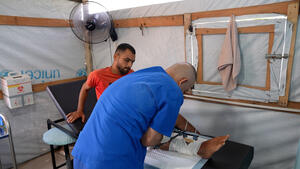
Even though there is currently no approved vaccine or specific treatment for Ebola caused by the Bundibugyo virus, treatment centres provide essential supportive care. This includes fluids, oxygen, nutrition, and symptom relief for fever, vomiting, diarrhoea and pain. This care helps the body fight the infection and improves the chances of survival.
✕ Myth
If I am isolated, it means I already have Ebola disease.
✓ Truth
Isolation is not a confirmation of disease. It is a precautionary step while tests are being done, because early symptoms of Ebola disease can look like other illnesses such as malaria or typhoid. Once results are available, isolation can be adapted depending on the diagnosis.
✕ Myth
I only have mild symptoms, so I do not need to go to a treatment centre.
✓ Truth
Common symptoms like fever, headache, vomiting or diarrhoea can mimic malaria, flu, or typhoid. During an Ebola outbreak, it is important to isolate and get tested to rule out Ebola disease, even if the chance is low. Early assessment and temporary isolation help protect you, your family, healthcare workers, and the community. Getting checked early is always the safest choice.
✕ Myth
If I am in a treatment centre, I cannot see or speak to my family.
✓ Truth
Treatment centres are organised to maintain safe communication between patients and families. Whenever possible, patients can communicate through safe visiting areas or other communication tools. Maintaining family connection is part of overall care and wellbeing.
✕ Myth
Doctors will use experimental drugs on patients without consent.
✓ Truth
Although clinical trials began in early July, they are strictly regulated. These trials have been approved by international medical and ethical authorities, and are conducted in close collaboration with health authorities. Participation in these trials remains strictly free and voluntary. Each patient receives clear explanations before making a decision. Refusing to participate would in no way affect access to standard medical care.
✕ Myth
When health teams disinfect homes, they are spreading the disease.
✓ Truth
Disinfection is a protective measure, not a source of risk. Normal household cleaning is not enough to inactivate the viruses that cause Ebola disease in contaminated bodily fluids. Health teams use properly prepared disinfectants, specialised equipment, and trained procedures to safely remove any possible contamination. This helps protect families, neighbours, and the wider community from infection.
✕ Myth
“Suspected” or “confirmed” means someone has done something wrong.
✓ Truth
These are medical terms, not judgments. They are used only to describe a person’s health status and guide care and testing. They do not carry blame, and they should never be used to shame or stigmatise anyone.
People who seek care or agree to isolation are helping protect their families and communities.
✕ Myth
Ebola disease outbreaks are used for business or profit.
✓ Truth
Ebola disease is a rare and highly dangerous illness that requires a fast and large-scale medical response to save lives and prevent further transmission. Because of this urgency, international health actors mobilise quickly. This is not driven by profit, but by the need to respond effectively to a serious public health emergency.
MSF uses its funding exclusively for medical and humanitarian activities, during Ebola outbreaks and beyond, including providing care for other essential health needs such as malaria, maternal health, and paediatric services.
Based on a conversation with Dr Tathy Modjake Nzoke, MSF Medical Activity Manager, North Kivu, Democratic Republic of Congo.
Ebola disease in the current outbreak in the Democratic Republic of Congo is caused by the Bundibugyo virus.