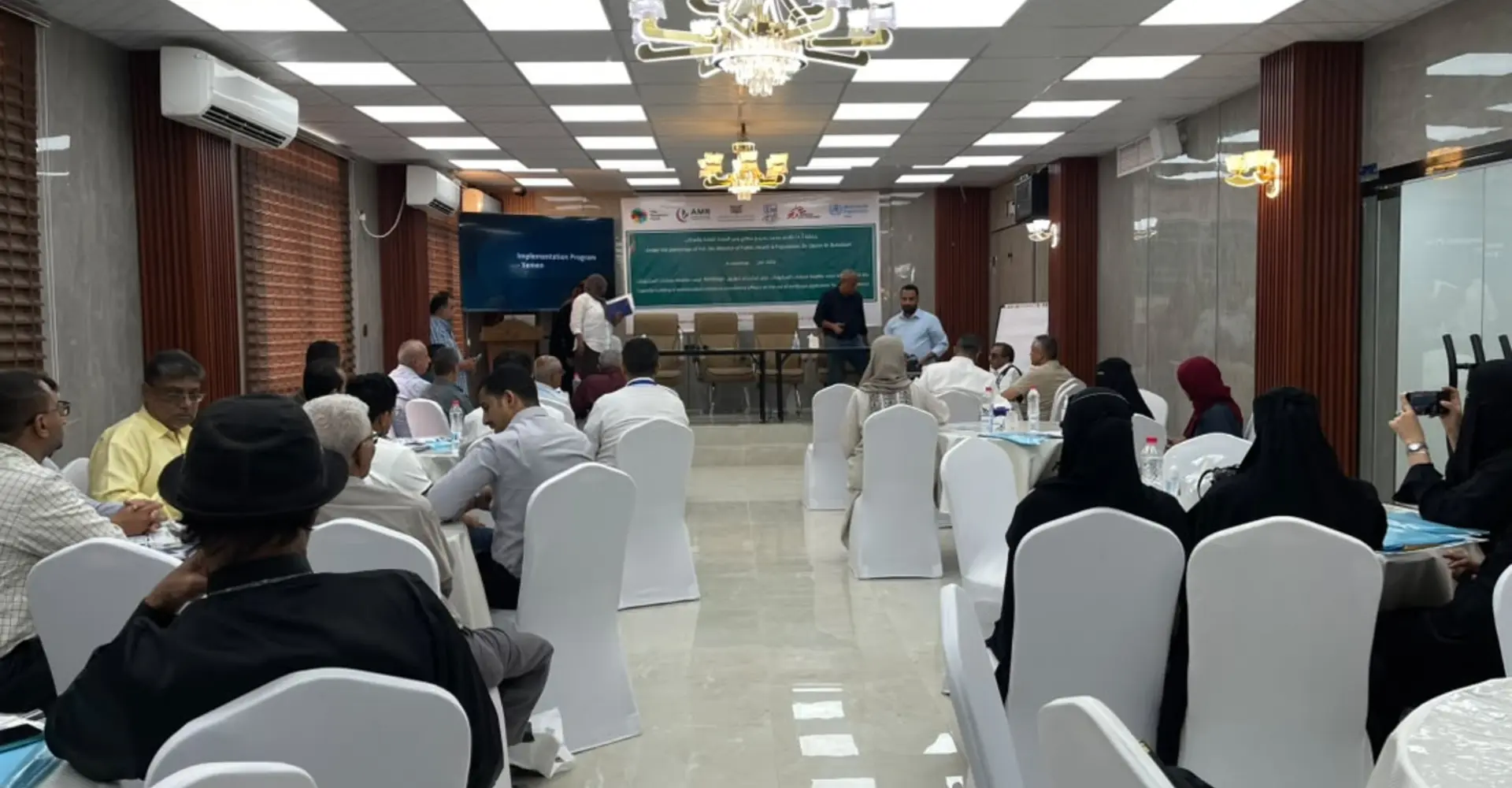
MSF, WHO and partners strengthen laboratory capacity to combat antimicrobial resistance in Yemen
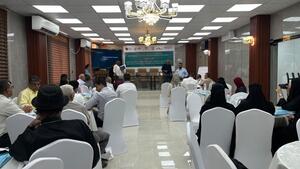
10 August 2026, Aden, Yemen The Ministry of Public Health and Population (MoPHP), the World Health Organization (WHO) and Médecins Sans Frontières (MSF), with support from the Pandemic Fund, have launched a 5-day capacity-building workshop to strengthen laboratory capacity for antimicrobial resistance (AMR) surveillance in Yemen.
Implemented within the framework of the National AMR One Health Programme, the workshop will take place from 10 to 14 August 2026 at the Central Public Health Laboratory. It brings together national AMR laboratory focal points and senior laboratory professionals for intensive practical training on the uses of Antibiogo, a digital health tool that supports lab technicians in delivering qualitative, secure and accurate antibiotic susceptibility testing, and an introduction to WHONET, a tool developed for the management and analysis of microbiology laboratory data with a special focus on the analysis of antimicrobial susceptibility test results.
To address the growing public health challenge posed by AMR, reliable laboratory systems need to detect resistance patterns, monitor trends and generate evidence to guide treatment decisions. Standardized and high-quality diagnostic data are essential to strengthening national AMR surveillance. The workshop addresses a key technical challenge in microbiology laboratories: variations in the visual interpretation of disk diffusion zones during antibiotic susceptibility testing.
Through hands-on training, participants will strengthen their ability to:
- install, configure and operate Antibiogo;
- capture and analyse images of laboratory test plates;
- measure inhibition zones;
- interpret antibiotic susceptibility results;
- validate and troubleshoot results and export laboratory data.

“Strong laboratory systems are fundamental to protecting people from the growing threat of antimicrobial resistance. By investing in the skills of laboratory professionals and introducing practical digital tools, we can improve the quality of surveillance data and support better-informed treatment and public health decisions across Yemen.”
Dr Syed Jaffar HussainWHO Representative in Yemen
The 5-day programme combines interactive technical sessions with practical laboratory simulations and applied exercises, enabling participants to work through the full testing process, from preparing the testing environment and capturing images to validating, recording and exporting results.

The workshop will also provide participants with an introduction to WHONET and its potential linkage with Antibiogo-generated data. This will lay the groundwork for dedicated WHONET training in the future, further strengthening AMR laboratory data management and surveillance in Yemen.
By the end of the training, participating laboratory focal points are expected to be better equipped to standardize antibiotic susceptibility testing interpretation across their facilities, minimize visual interpretation errors and improve the quality and consistency of AMR laboratory data.
Working together
Through the National AMR One Health Programme, MoPHP, WHO and MSF, with support from the Pandemic Fund, are working together to strengthen Yemen’s laboratory and surveillance capacities and advance a coordinated One Health approach to addressing AMR.
Source
This article is adapted from a news release published by the WHO Regional Office for the Eastern Mediterranean on 10 August 2026. Read the original release.