MSF delivers medical aid after 7.8-magnitude earthquake in Mindanao
Philippines — Emergency response
Sarangani, Philippines — 29 June 2026

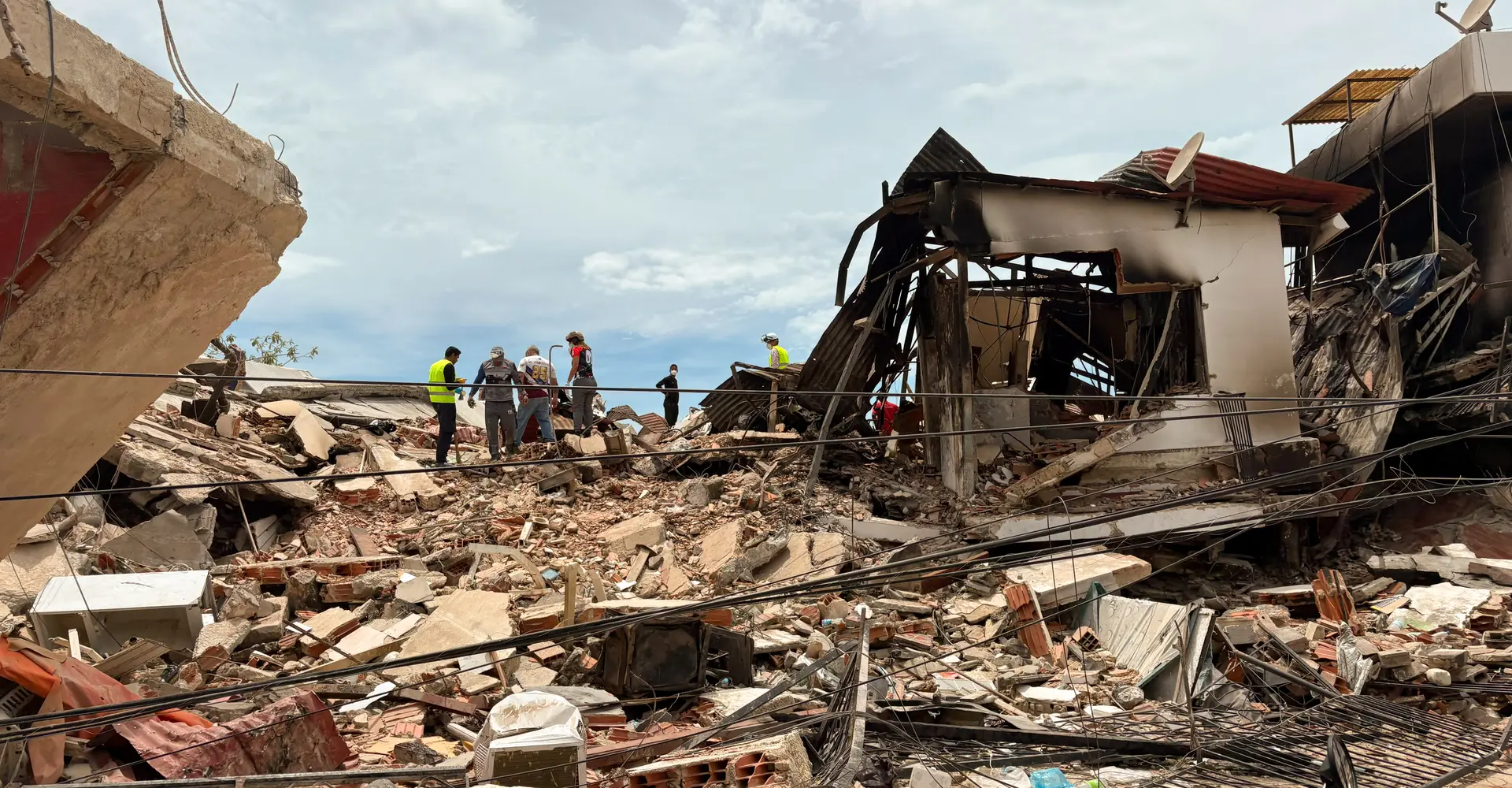
Doctors Without Borders/Médecins Sans Frontières (MSF) emergency teams have been providing medical and humanitarian assistance to communities severely affected by the devastating 7.8-magnitude earthquake that struck Mindanao, in the southern Philippines, on 8 June 2026. The earthquake has claimed at least 78 lives, left hundreds injured, and forced thousands of families from their homes.
In the days immediately following the disaster, reports indicated a surge in humanitarian actors carrying out assessments and providing rapid response. However, by the end of the first week, accounts of unmet needs began to emerge, prompting MSF to deploy an assessment team on 14 June. In close collaboration with the Department of Health, MSF then sent teams to two of the hardest-hit municipalities — Malapatan and Glan, in Sarangani Province.
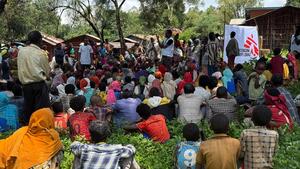
In both locations, many affected communities have still not been reached by other medical organisations. Some organisations that initially committed to support mobile clinics pulled out a week later because of aftershocks, leaving the Provincial Health Office to directly request additional support from MSF. MSF was among the first to provide basic medical care, alongside mental health and psychosocial support.

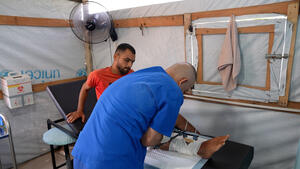
Building on this response, MSF teams are strengthening local health systems by supporting overstretched facilities, deploying mobile clinics to reach remote communities, and facilitating referrals for patients who need higher levels of care. Essential medical supplies have also been provided to help sustain services in affected areas.
In addition to basic medical care, teams are expanding their mental health and psychosocial support activities through schools and community networks. This includes giving orientation to teachers in Psychological First Aid (PFA), equipping them to provide ongoing, basic psychological support to children and to help address trauma as their communities begin to recover.
“The earthquake has not only overwhelmed health facilities with urgent medical needs but has also left deep psychosocial scars across affected communities. Many people, especially children and teachers, are struggling to cope with fear, loss and uncertainty, while access to healthcare remains severely disrupted — particularly in remote and hard-to-reach areas. Addressing both physical and mental health needs is critical to helping communities recover and prevent further suffering.”
Dr Muhammad Shoaib — MSF Head of Mission in the Philippines
Teachers leading the way to recovery
Teachers such as Mea Lou Jumamil, 37, from Adelina T. Recto Elementary School in Glan, Sarangani, were deeply affected by the earthquake, which struck on what was meant to be the first day of the new school year. Not only were their classrooms severely damaged, but many also lost their homes. Beyond these physical losses, they faced significant emotional distress — grappling with trauma and uncertainty in the aftermath, while still carrying the responsibility of keeping their students safe.

For Mea Lou, the moment the earthquake struck remains vivid.
“We had just settled into the classroom after the flag ceremony when the earthquake started. My first thought was about the children. I shouted for them to go outside and kept guiding them until we were all safe.”
Despite regular earthquake drills, the experience was overwhelming for both teachers and students.
“Even with regular drills, the students were shocked and didn’t know what to do. Afterwards, it was difficult for us — we couldn’t sleep and were always on edge.”
The dual impact on their personal and professional lives left teachers struggling to recover, even as they continued to support their students through the same crisis. With support from MSF, teachers like Mea Lou are beginning to regain a sense of stability.
“I am grateful to Doctors Without Borders for supporting us and teaching us psychological first aid. The exercises helped us feel calmer and less afraid of the ‘what ifs’.”
Mea Lou Jumamil — teacher and Grade 4 adviser, Adelina T. Recto Elementary School, Glan, Sarangani
The response so far
MSF response in Sarangani
- 629patients provided with care
- 363mental health consultations
- 4previously unreached barangays (communities) reached
Figures as of 29 June 2026
As of 29 June, the team had reached four previously unaddressed barangays (communities) in Sarangani Province, providing services to 629 patients, including 363 mental health consultations. Common cases managed by MSF include viral upper respiratory tract infections, skin diseases and infected wounds, hypertension, diabetes, and musculoskeletal conditions. Mental health and psychosocial support activities are ongoing, including psychological first aid orientation and psychosocial processing for teachers, as well as individual counselling. Medicines and medical supplies have also been provided to the Provincial Health Officer of Sarangani as part of ongoing support efforts.


Ends