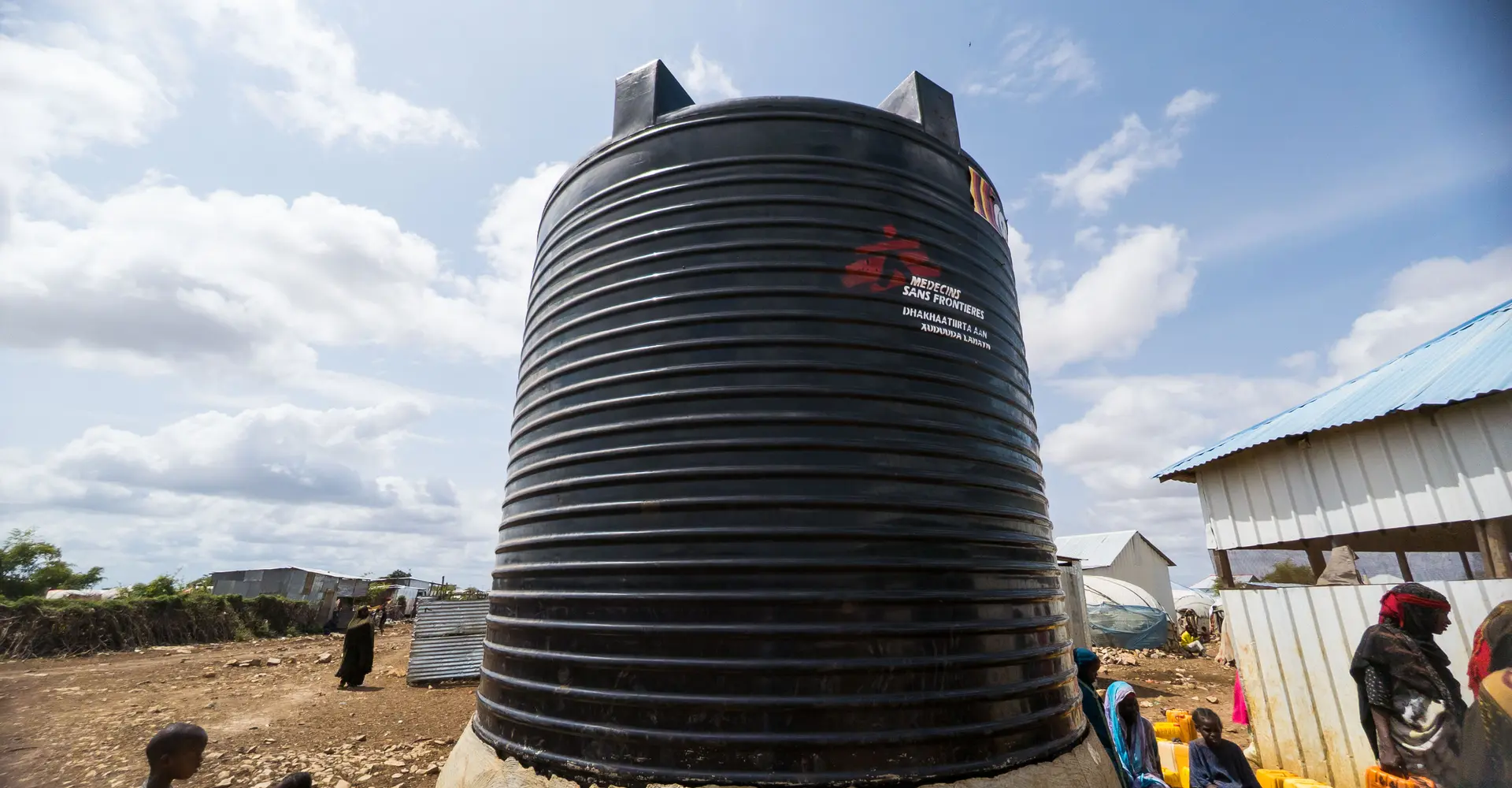
As Drought Deepens, Baidoa's Displaced Face a Worsening Water and Sanitation Crisis
Somalia · Water and Sanitation
Médecins Sans Frontières is scaling up its water and sanitation response in Baidoa, but need is outpacing what the current response can meet.
"My wife would stand in a line for water from early in the morning until eight at night."
Dahir Nur, 50, a former farmer now living in Elbeti 1 camp in Baidoa after drought forced his family from their village.
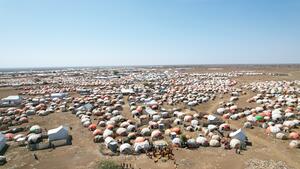
Baidoa, the interim capital of Somalia's Southwest State, is now home to an estimated 1.6 million people, nearly half of them displaced. Many have arrived in recent months, fleeing conflict and climate shocks in Bakool, Bay, Lower Shabelle, and other parts of the country. Most have fled a devastating drought that has stripped families of water, food, and livelihoods.
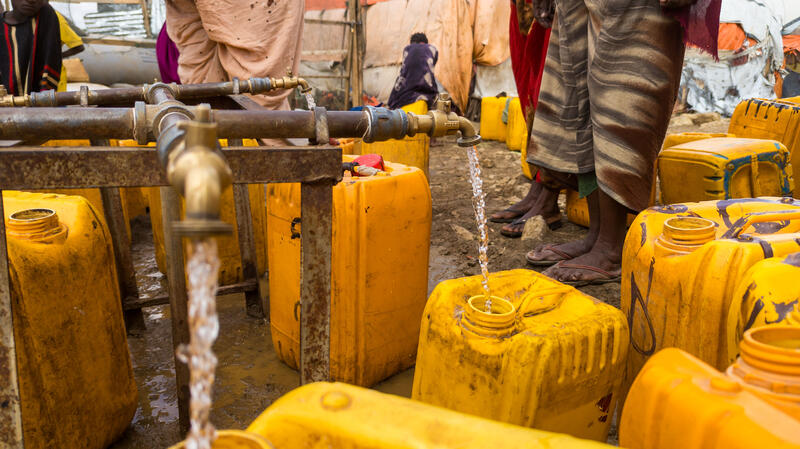
Water, sanitation, and hygiene (WASH) needs are among the most severe. Infrastructure is failing and water sources have dried up. Nationally, nearly one in five households lack reliable access to water, according to the 2026 Humanitarian Needs and Response Plan. In Baidoa, displaced families pay $1.50–$2.50 for a 200-litre drum of trucked water, a cost many cannot afford. According to the 2026 Humanitarian Needs and Response Plan (HNRP), two-thirds of households nationwide share unimproved latrines, and one in five reports that women and girls avoid using them due to safety concerns.
Southwest State authorities declared a drought emergency on 18 November 2025, and conditions have only deteriorated since. Just as needs continue to rise, funding cuts have forced humanitarian organisations to reduce or suspend services in Baidoa and elsewhere in the country, leaving Baidoa's displaced population without critical support and increasingly dependent on the limited assistance that remains.
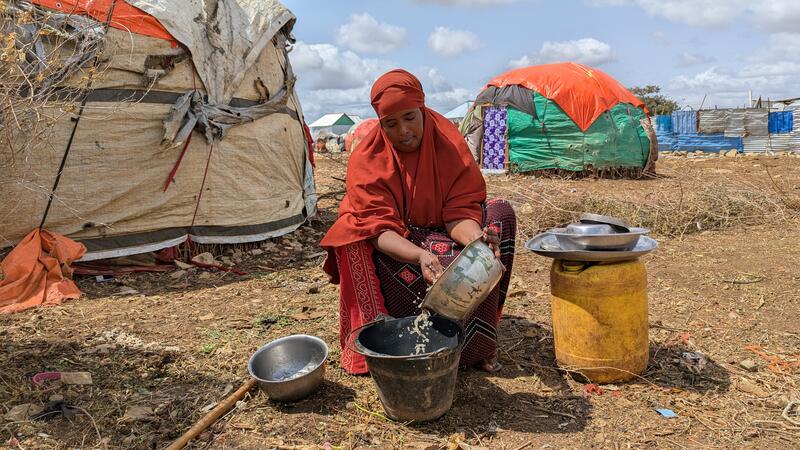
"Life is very hard for us. You can understand a new displaced person in the camp, with no one to depend on. My daughter needs special care, including when she goes to the latrine. I couldn't care for her properly."
Muna Ibrahim, a mother of two children with autism who need constant attention.
Médecins Sans Frontières (MSF) has scaled up water trucking and sanitation support to meet the emergency needs. Between December 2025 and June 2026, our teams delivered more than 47 million litres of safe water to 17 distribution sites, reaching 3,775 households from both host and displaced communities. The response has also included building 150 solar-lit, permanent latrines with disability-friendly design across eight camps for displaced people, and desludging 26 latrines across five sites.
MSF's Response in Baidoa · Dec 2025 – Jun 2026
Muna Ibrahim arrived in Baidoa on the back of a truck that had been carrying potatoes, after leaving Kobe, a camp for Somali refugees in Ethiopia's Liban zone. Other organisations used to support her family when they were in the camps, but that support had stopped completely before she left.
"We used to fetch water from the river. People with donkey carts can haul it back, but everyone else has to carry it on their shoulders, including me. Since I arrived, MSF is the only organisation I have seen here providing us with water. Now we receive four jerrycans in the morning and four in the evening."
Muna Ibrahim
Needs across Bay region remain severe, and current capacity is insufficient to prevent the situation from worsening. MSF is calling on donors and humanitarian actors to urgently expand water trucking, latrine construction, and desludging services in Baidoa and across Southwest State.
The gap between what is needed and what is funded is not inevitable. It is a choice. With every passing month, more families are pushed deeper into crisis.